

“So which one do I need?”
I hear this question at least once a week at Townsville Dental Clinic. A patient sits down, points to a problem tooth, and wants to know whether they need a crown or a bridge. Sometimes they’ve been researching online and the terms have started to blur together.
Here’s the thing: crowns and bridges aren’t interchangeable options for the same problem. They solve completely different issues. One restores a damaged tooth. The other replaces a missing tooth. Understanding which you need comes down to a simple question: is your tooth still there?
Let me walk you through the real differences, when each treatment makes sense, and what you should actually consider when making this decision.
How is a Crown Different from a Bridge?
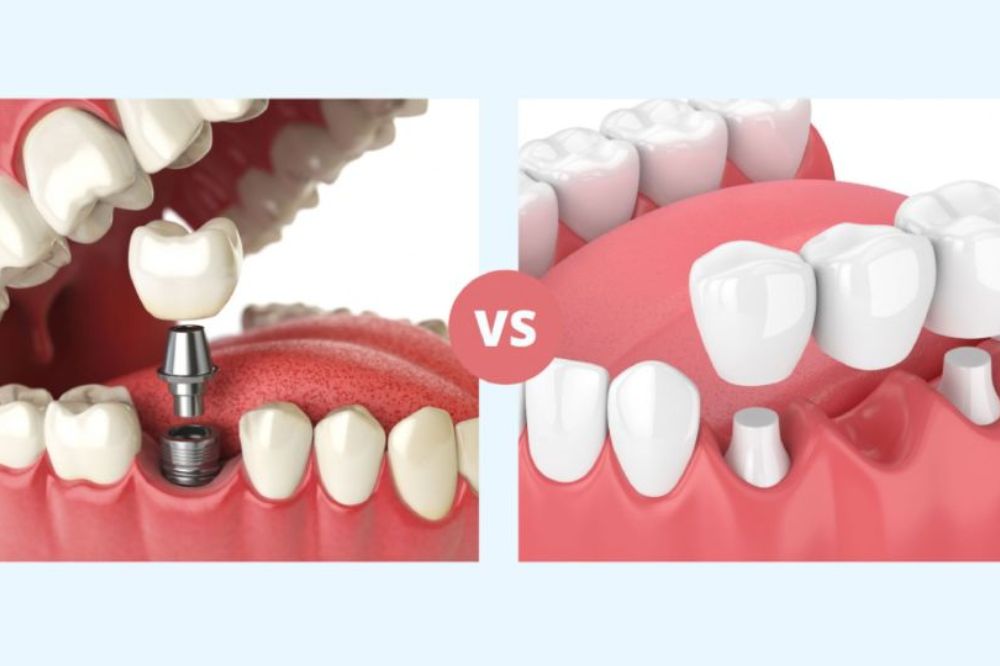
Think of it this way: a crown is a helmet for a damaged tooth. A bridge is a replacement for a missing tooth that uses neighboring teeth as anchors.
A crown covers one tooth that’s broken, heavily decayed, or weakened. Your natural tooth is still present underneath. We reshape it, removing damaged or decayed portions, then cement a custom-made cap over it. The crown becomes the new outer surface of your tooth, protecting what’s left of the natural structure underneath.
I just finished a crown last week for someone who’d cracked a molar biting into an olive pit. The tooth was still alive and healthy inside, but the crack extended below the gumline. Without a crown, that tooth would have continued splitting and eventually needed extraction. The crown holds it together and distributes biting forces evenly.
A bridge spans a gap where a tooth is completely missing. It typically consists of two crowns on the teeth adjacent to the gap (we call these abutment teeth) with a false tooth suspended between them. The entire structure is one connected piece. We prepare the teeth on either side of the gap, then cement the bridge over them.
The bridge literally bridges the space where your tooth used to be.
Here’s where confusion often happens: both treatments involve crowns. But a crown is a standalone restoration for one tooth. A bridge uses crowns as anchors to hold a replacement tooth in place.
When Would You Choose a Bridge Over a Crown?
This isn’t really a choice situation. You need what your mouth requires.
You need a crown when you still have a tooth worth saving. Maybe it’s fractured, heavily filled, had root canal treatment, or severely worn. As long as there’s sufficient healthy tooth structure remaining and the roots are sound, a crown can restore that tooth to full function.
You need a bridge when a tooth is already gone and you want to replace it without implants. The teeth on either side of the gap must be strong enough to support the additional load of the replacement tooth.
At Townsville Dental Clinic, we see three common scenarios where bridges make sense:
Someone lost a tooth years ago and finally decided to do something about it. The gap has been there long enough that the adjacent teeth haven’t shifted too much, and they’re healthy enough to serve as anchors.
A tooth is too damaged to save. Maybe it’s broken at the root, or decay has destroyed too much structure. We need to extract it, and a bridge provides immediate replacement using the neighboring teeth.
Dental implants aren’t an option. Some patients have medical conditions, bone loss, or budget constraints that make implants impractical. A bridge offers an alternative that doesn’t require surgery or bone grafting.
I worked with someone recently who’d lost an upper premolar in an accident five years ago. She’d been avoiding that side when chewing, which was causing uneven wear on her other teeth. She didn’t want implant surgery. A bridge made perfect sense. We prepared the teeth on either side, and now she has a seamless restoration that functions like her natural teeth.
The decision isn’t crown versus bridge. It’s determined by whether you have a tooth that needs protecting or a gap that needs filling.
Can Crowns Support Bridges?
Yes, and that’s actually how most bridges work.
A traditional dental bridge is essentially three or more crowns fused together. The crowns on the ends fit over your natural teeth (the abutment teeth). The crown in the middle (the pontic) fills the gap where the tooth is missing.
When we prepare teeth for a bridge, we’re preparing them exactly as we would for individual crowns. Same reshaping process, same measurements, same fitting procedures. The difference is that instead of making three separate crowns, the lab fabricates them as one connected unit.
This is why the abutment teeth need to be healthy and strong. They’re not just supporting themselves anymore. They’re carrying the load for the missing tooth too.
Think of it like a real bridge over water. The support pillars on either side need to be solid because they’re bearing the weight of the entire structure.
Here’s what concerns me sometimes: when a dentist recommends a bridge, but one or both of the abutment teeth are questionable. Maybe there’s existing decay, gum disease, or a history of problems. Using those teeth as bridge supports is risky. They might fail under the increased load, and then you’ve lost not just the replacement tooth, but one or both anchor teeth too.
At Townsville Dental Clinic, we’re conservative about this. If the neighboring teeth aren’t ideal candidates, we’ll discuss alternatives like implants or partial dentures rather than compromising teeth that might not hold up long term.
Which is More Expensive: Crowns or Bridges?
Bridges cost more because you’re paying for multiple crowns plus the fabrication of the replacement tooth.
A single crown typically ranges based on material and complexity. You’re paying for one tooth’s worth of work: the preparation appointment, lab fees for fabrication, and the final cementation.
A three-unit bridge (the most common type) is essentially three crowns joined together. The cost reflects that. You’re paying for two preparation teeth plus the pontic, increased lab fabrication complexity, and often longer appointment times.
The math is straightforward. If a crown costs X, a three-unit bridge will cost approximately 2.5 to 3 times that amount. Not quite triple because some costs are shared (one set of impressions, one cementation appointment), but significantly more than a single crown.
Material choices affect both. You can get crowns and bridges made from different materials at different price points:
All-porcelain restorations look most natural and work beautifully for front teeth. They’re typically the most expensive option.
Porcelain-fused-to-metal combines strength with aesthetics at a moderate price point. Good for back teeth where you need durability.
Gold or metal alloys are incredibly durable and kind to opposing teeth. They’re often chosen for back molars where appearance is less critical.
Here’s what I tell patients: don’t choose based solely on upfront cost. Consider longevity and what happens if something goes wrong.
A bridge that fails means potentially losing the anchor teeth, not just the replacement. That’s a bigger problem and more expensive to fix than a single crown needing replacement. The initial investment needs to account for long-term durability.
Do Bridges Last as Long as Crowns?
Generally, crowns last longer because they’re simpler and put less stress on teeth.
Crowns typically last 10 to 15 years, sometimes much longer with good care. The tooth underneath is getting the same forces it always received. The crown is just a protective covering. Failure usually happens from new decay at the margins, fracture of the crown material, or loss of the underlying tooth structure.
Bridges face additional challenges. They typically last 10 years, though many last longer. But several factors work against them:
The abutment teeth are supporting extra load. Every time you chew on that replacement tooth, the force transmits through the bridge to the anchor teeth. Over years, this can cause problems.
Cleaning under the pontic requires special technique. You can’t floss normally because the bridge is one connected piece. You need to use floss threaders or special bridge floss to clean underneath where the fake tooth contacts your gums. Patients who don’t maintain this area develop gum disease or decay on the abutment teeth.
One weak point compromises everything. If decay develops on either anchor tooth, or if one abutment tooth fails, the entire bridge fails. You can’t just fix one part. The whole thing needs to be remade.
I’ve seen beautiful bridges fail at year seven because a patient couldn’t maintain the hygiene underneath. Food packed between the pontic and gum tissue, bacteria accumulated, and decay started on one of the abutment teeth. When we removed the bridge, we discovered the decay was extensive. What started as a bridge to replace one missing tooth ended up requiring extraction of an anchor tooth. Now there are two gaps instead of one.
That’s why I’m so insistent about home care with bridges. The longevity depends heavily on your commitment to cleaning it properly every day.
Crowns are more forgiving. You can brush and floss them like normal teeth. Bridges require dedication.
Making the Right Choice at Townsville Dental Clinic
Here’s what I want you to take away from this: you’re not really choosing between a crown and a bridge based on preference. The choice is made by your dental situation.
Still have the tooth? Crown.
Tooth is missing? Bridge, implant, or removable partial denture.
Tooth is damaged beyond saving? Extract it, then decide how to replace it.
The better question is what happens after you lose a tooth. That’s where you actually have options. A bridge is one way to replace it. Implants are another. Sometimes doing nothing is reasonable if the tooth isn’t critical for function or appearance.
What matters most is understanding what each treatment does, what it requires from you in terms of maintenance, and what realistic longevity looks like based on your specific situation.
I’ve placed hundreds of crowns and bridges over the years. The most successful ones have something in common: patients who understood what they were getting, committed to maintaining it properly, and had realistic expectations about how long it would last.
Have you been told you need a crown or bridge? What questions are still unclear? I genuinely want to know what concerns patients most when facing these decisions.