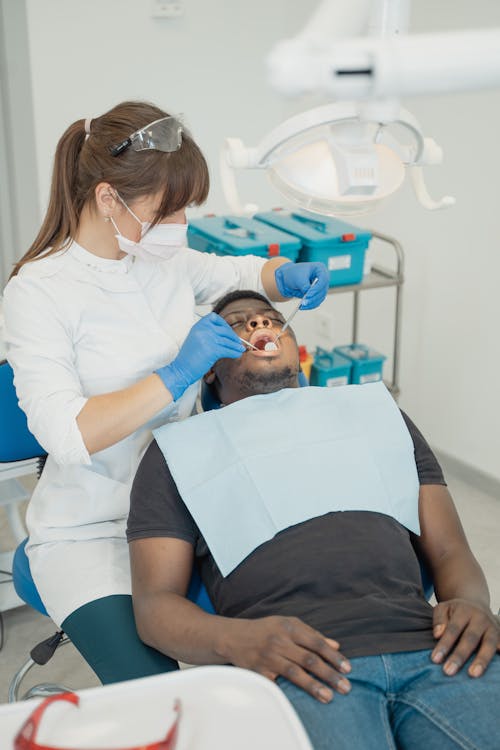
Why Wisdom Teeth Cause Problems
Wisdom teeth (third molars) are the last permanent teeth to develop, typically erupting between ages 17 and 25. In the modern human jaw, which has become progressively smaller over millennia of dietary change, there is often insufficient space at the back of the arch for wisdom teeth to erupt normally.
When space is limited, wisdom teeth can become impacted — unable to fully emerge into the mouth. Impaction may be horizontal (tooth angled towards the second molar), vertical (erupting straight up but blocked by the second molar), mesioangular (angled towards the front of the mouth), or distoangular (angled backwards). Approximately 73 per cent of Australian young adults have at least one impacted wisdom tooth.
This guide covers the full picture for Townsville patients: when removal is necessary, what the procedure involves, how recovery progresses, what it costs, and which local providers are available.
When Wisdom Tooth Removal Is Recommended
Pericoronitis (recurring gum infection)
The most common reason wisdom teeth are extracted in Townsville is pericoronitis — infection and inflammation of the gum flap (operculum) overlying a partially erupted wisdom tooth. Food and bacteria trapped beneath the operculum cause repeated acute infections: pain, swelling, foul taste, and sometimes lockjaw and lymph node swelling.
A single episode of mild pericoronitis can be managed with irrigation and antibiotics. Recurrent pericoronitis is an indication for extraction — the tooth will not erupt further, and the infection cycle will continue indefinitely while the tooth remains.
Damage to the second molar
An impacted wisdom tooth pressing against the root of the adjacent second molar can cause:
- Root resorption of the second molar (the second molar’s root dissolves due to pressure)
- Decay in the contact area between the wisdom tooth and second molar (food trapping in the inaccessible gap)
- Bone loss between the two teeth
These consequences are often visible on OPG x-ray before symptoms develop, which is one argument for early prophylactic removal.
Cyst formation
A cyst can develop around the crown of an impacted wisdom tooth — a dentigerous cyst. These grow slowly and often asymptomatically, sometimes reaching significant size before discovery. Cysts destroy bone and can cause adjacent tooth damage, fracture risk, or in rare cases, nerve involvement. Extraction of the tooth and cyst removal is required.
Orthodontic and crowding concerns
Whether wisdom teeth cause or worsen dental crowding is debated. There is no strong evidence that wisdom teeth directly cause incisor crowding, but some orthodontists recommend removal to reduce relapse pressure after orthodontic treatment. This is a clinical judgement call rather than a universally accepted indication.
Pathology or unusual anatomy
Occasionally wisdom teeth develop unusually: ectopic positions (erupting through the cheek or towards the sinus), dilacerated roots, or associated pathology. These require specialist assessment.
What the Procedure Involves
Assessment and imaging
Before removal, an OPG (panoramic x-ray) is essential to assess:
- Root development and morphology
- Proximity to the inferior alveolar nerve (the main nerve running through the lower jaw)
- Relationship to the maxillary sinus (upper wisdom teeth)
- Degree and direction of impaction
- Bone density and any associated pathology
CBCT scanning is sometimes ordered for lower wisdom teeth in very close proximity to the inferior alveolar nerve canal, to better define the three-dimensional relationship before surgery.
Types of extraction
Simple extraction: The tooth is erupted or nearly erupted with minimal bone coverage. Local anaesthetic, elevation with a dental instrument, and forceps extraction. Minimal surgical trauma, rapid healing.
Surgical extraction: The tooth is impacted under bone or gum tissue. Requires:
- Local anaesthetic injection (inferior alveolar nerve block for lower teeth)
- Incision in the gum to expose the tooth and bone
- Bone removal with a dental drill (ostectomy) to expose the crown
- Section (cutting) of the tooth into pieces to facilitate removal in smaller fragments
- Socket irrigation and curettage
- Sutures to close the incision
Surgical complexity varies from a straightforward cut-and-remove of a partially impacted tooth to an extensive procedure for a horizontally impacted tooth with long curved roots close to the nerve.
Anaesthesia options
Local anaesthetic only: Appropriate for motivated patients with straightforward impactions. The patient is awake but should not feel pain — only pressure. Cost-effective.
Nitrous oxide (happy gas) + local anaesthetic: Reduces anxiety and provides mild analgesia but the patient remains fully conscious. Appropriate for mild to moderate anxiety.
Oral sedation (tablet) + local anaesthetic: A benzodiazepine taken 30 to 60 minutes before the procedure. Reduces anxiety; the patient may have reduced memory of the procedure. Requires a driver.
IV sedation (twilight sedation) + local anaesthetic: The most commonly used sedation for wisdom teeth. Administered by a dentist with sedation training or a medical anaesthetist. Provides deep sedation — most patients have no memory of the procedure. Safe, well-established, requires a driver and no eating before the appointment. See the sedation dentistry Townsville guide.
General anaesthesia in hospital: Reserved for medically complex patients, patients who cannot cooperate under sedation (severe needle phobia, intellectual disability), extremely complex impactions, or when large cysts require concurrent management. Arranged through the Townsville Hospital Oral Health Service or private oral and maxillofacial surgeons.
Recovery Timeline
Recovery varies by complexity of extraction, number of teeth removed, and individual healing response. A typical post-operative course after surgical removal of impacted lower wisdom teeth:
| Day | What to expect |
|---|---|
| Day of surgery | Numbness wears off in 2–4 hours; some bleeding; moderate to severe pain once anaesthetic wears off; swelling begins |
| Day 1 | Swelling increasing; bruising may appear on the face; significant discomfort; rest required; soft diet |
| Days 2–3 | Swelling at its peak; may be difficult to open mouth fully (trismus); consistent analgesia required |
| Days 3–5 | Swelling begins to reduce; discomfort manageable with regular ibuprofen and paracetamol; most patients return to light work |
| Day 7 | Sutures typically dissolve or removed if non-resorbable; socket healing visible; most patients return to normal diet gradually |
| Weeks 2–4 | Progressive socket closure; minor food trapping in healing socket is normal; discomfort fades |
| Months 3–6 | Full bone fill of extraction sites |
Dry socket: the main complication
Dry socket (alveolar osteitis) occurs when the blood clot protecting the extraction socket is dislodged or dissolves prematurely, exposing the bone to food, bacteria, and air. It causes severe, radiating pain typically developing 2 to 5 days after extraction — pain that worsens rather than improves as days pass.
Dry socket affects approximately 2 to 5 per cent of routine extractions and 25 to 35 per cent of impacted lower wisdom tooth extractions. Risk factors include: smoking, female sex, oral contraceptive use, difficult extraction (more trauma), poor oral hygiene, and rinsing or spitting vigorously in the first 24 hours.
Treatment involves irrigation of the socket and packing with a medicated dressing (containing eugenol or bismuth-iodoform-paraffin paste) that provides pain relief and protects the socket. Multiple dressing changes may be needed over 5 to 10 days.
See the dry socket treatment guide for detailed management information.
Cost in Townsville (2026)
| Procedure | Estimated cost |
|---|---|
| OPG x-ray | $80–$120 |
| Simple extraction (erupted tooth) | $200–$350 per tooth |
| Surgical extraction (impacted, moderate) | $350–$550 per tooth |
| Surgical extraction (deeply impacted, complex) | $500–$750 per tooth |
| Nitrous oxide sedation (per appointment) | $100–$200 |
| IV sedation (per appointment) | $400–$800 |
| Oral maxillofacial surgeon fee (vs general dentist) | Add $100–$250 per tooth |
| Hospital theatre fee (if GA required) | $500–$1,500 (Medicare/insurance rebates apply) |
Private health insurance: Most mid-tier and comprehensive extras policies provide a rebate for surgical extractions. Typical rebates:
- Simple extraction: $80–$150 per tooth
- Surgical extraction: $150–$350 per tooth
Hospital admissions for wisdom tooth surgery under general anaesthesia are covered by hospital insurance, not extras cover.
JCU Dental: Offers wisdom tooth extractions at significantly reduced fees. Complex impactions requiring specialist-level skill may be referred to their oral and maxillofacial surgery supervisor. See the JCU Dental guide.
For a comprehensive breakdown of dental costs in Townsville see the dental costs 2026 guide.
Dentist vs Oral and Maxillofacial Surgeon
Most wisdom tooth extractions can be performed by a competent general dentist. Referral to an oral and maxillofacial surgeon (OMFS) is appropriate when:
- The inferior alveolar nerve is very close to or touching the wisdom tooth roots on OPG or CBCT
- The tooth is deeply impacted with complex root anatomy
- There is a dentigerous cyst or other pathology requiring concurrent management
- The patient has significant medical comorbidities (bleeding disorders, bisphosphonates, post-radiation jaw, significant immunosuppression)
- General anaesthesia is preferred or clinically indicated
- Previous failed extraction attempt
- Maxillary (upper) wisdom teeth with roots extending into the maxillary sinus
Townsville has access to oral and maxillofacial surgical services through:
- Townsville University Hospital (public, for eligible patients)
- Visiting private OMFS specialists (inquire through your general dentist for current visiting specialist arrangements in Townsville)
Infection After Wisdom Tooth Removal
Post-extraction infection is less common than dry socket but more serious. Signs include:
- Worsening pain after day 5 when pain should be improving
- Increasing swelling beyond day 3
- Fever
- Pus or persistent bad taste from the socket
- Swelling spreading towards the neck or floor of the mouth
Mild localised infection is treated with antibiotics and socket irrigation. Spreading infection requires urgent assessment — if facial swelling is progressing or you are developing difficulty swallowing or breathing, go to the Townsville Hospital emergency department.
See the tooth infection spreading guide for a detailed overview of when dental infection becomes dangerous.
Related Guides
- Impacted wisdom teeth: signs, symptoms, treatment
- Wisdom teeth removal cost Queensland
- Dry socket: symptoms, treatment, prevention
- Dissolvable stitches after wisdom teeth
- Foods to eat after wisdom teeth removal
- Exercise after wisdom tooth removal
- Best wisdom teeth removal clinics Townsville
- Black Triangles Between Front Teeth Townsville
- Day By Day Wisdom Teeth Removal 14 Day Tracker
- First Filling Child Parent Prep Guide Townsville
- Is It Normal To Have Bad Breath After Wisdom Teeth Removal
- Is It Normal To Snore More After Wisdom Teeth Removal
- Second Molar Wisdom Adjacent Restoration Challenges
- Teething Timeline Townsville Parents Guide
- Thumb Dummy Weaning Townsville Parents Guide
- Tropical Tour Guide Oral Cancer Screening Townsville
- Why Do My Teeth Feel Fuzzy At The End Of The Day
- Wisdom Teeth Removal Robina
- Wisdom Teeth Removal Southport
- Wisdom Teeth Removal Uni Break Townsville Planning
- Worn Down Front Teeth Grinding Reconstruction Townsville
- Yellow Teeth Antibiotics Tetracycline Staining Townsville
- Numbness After Wisdom Teeth Removal
- Wisdom Teeth Removal Gold Coast Students
- Sensitive Teeth After Filling Townsville
- Enamel Hypomineralisation Chalky Teeth Children Townsville
Frequently asked questions
Do all wisdom teeth need to be removed?
No. Wisdom teeth that have fully erupted into a functional position, have sufficient space, are not causing crowding or decay, and can be cleaned effectively do not require removal. Extraction is recommended for wisdom teeth that are impacted (unable to fully erupt), causing repeated episodes of pericoronitis (gum infection around the partially erupted tooth), causing damage to the adjacent second molar, developing cysts or pathology, or contributing to crowding. An OPG x-ray and clinical assessment are required to determine whether removal is clinically indicated.
How much does wisdom tooth removal cost in Townsville?
Simple wisdom tooth extractions in Townsville cost approximately $200 to $350 per tooth at a general dental clinic. Surgically impacted wisdom teeth requiring incision, bone removal, and sectioning cost approximately $350 to $600 per tooth at a general dental clinic or $450 to $750 per tooth with an oral and maxillofacial surgeon. Removal under IV sedation adds approximately $400 to $800 for the sedation component. Private health insurance with major dental extras typically provides a rebate of $150 to $350 per tooth depending on the item numbers and fund. JCU Dental (Douglas) offers surgical extractions at reduced rates.
What is the recovery time after wisdom tooth removal?
Most patients return to normal activity within 3 to 5 days after straightforward wisdom tooth extraction. Significant swelling typically peaks at days 2 to 3 and subsides by day 7. Complete socket healing takes 3 to 4 weeks; full bone healing takes 3 to 6 months. More complex surgical extractions or removal of four wisdom teeth in a single session typically involve more prolonged discomfort and swelling. Soft diet for 5 to 7 days, no heavy exercise for the first 48 to 72 hours, and no smoking or drinking through a straw are standard aftercare instructions.
When should wisdom teeth be removed: early or wait until symptomatic?
Both approaches are defensible and experts differ on this. Early removal (ages 17 to 25) is technically easier because roots are not fully formed, bone is less dense, and healing is faster. Waiting until symptomatic avoids surgery that may never have been needed in a proportion of patients. Australian dental guidelines do not mandate prophylactic removal of asymptomatic impacted wisdom teeth. The decision is made individually based on the degree of impaction, proximity to nerves and the second molar, likelihood of future problems, and the patient's risk tolerance for surgery.
Do I need a specialist oral surgeon for wisdom teeth removal, or can a general dentist do it?
Most partially erupted or moderately impacted wisdom teeth are within the skill set of an experienced general dentist. Referral to an oral and maxillofacial surgeon (OMFS) is appropriate for: deeply impacted teeth close to the inferior alveolar nerve; patients with significant medical complexity; patients requiring general anaesthesia; difficult anatomical cases on OPG (close proximity to maxillary sinus); or patients with pathology around the wisdom tooth. If in doubt, ask your dentist whether they are comfortable managing your specific impaction pattern.
Popular Townsville treatment cost guides
Useful next pages
Also browse
- Inlays & Onlays in Townsville — Cost & Options (2026)
- Best Dental Fillings Clinics Bundaberg 2026
- Preventive Dentistry Cost Bundaberg 2026
- Ceramic Inlays & Onlays Cost Bendigo 2026
- Wisdom Teeth Removal Cost Bendigo 2026
- DentaGlow Dentist - Taigum — Clinic Profile
- Best Dentists for Nervous Patients Albury–Wodonga 2026
- Granite Belt Dental Warwick — Clinic Profile
Need to compare local options?
Use the directory filters before contacting a clinic for current availability, fees, and treatment advice.